
Why We Rebuilt Our Revenue Model, Then Acquired an Interior Design Company

How SPOR Group moved from project based AV installs to a recurring revenue model, and why that same thinking led to acquiring Squaredot.
SPOR Group | Updated 2026

Most AV companies start the same way. Someone with a background in installation begins fitting screens and speakers into meeting rooms, invoicing project by project, and hoping the next job lands before the bank balance runs dry. SPOR Group started that way too. This is the story of how a recurring revenue model changed that, and why the same thinking eventually led us to acquire an interior design business.
Why Project Based Revenue Could Not Scale
In the early days, the business model was simple. Design the solution, buy the kit from manufacturers at trade price, sell the finished install with a markup. Win a project, invoice for the project, move on to the next one. It works, and it feels good, until the pipeline runs dry and there is nothing coming in behind it.
Inside the business this got nicknamed the Gary in a van model, one person turning up, hanging a television on a wall, connecting a couple of speakers and a microphone, and driving off to the next job. It is a perfectly normal way to run an AV business. It is also a model with a ceiling built into it, because every month starts back at zero.
Building a Recurring Revenue Model Around Support, Not Just Installation
The question we kept coming back to was simple. What happens at 2 minutes to 9 on a Monday morning, when someone walks into an important boardroom meeting, presses start on the video call, and the camera does not work.
The answer became the basis of a recurring revenue model. Instead of walking away after installation, we started offering a service and maintenance contract, monitoring every device remotely so an issue gets flagged before anyone even sits down for the meeting. That ongoing service fee, not the original install, is what actually lets an AV business grow month on month rather than starting from scratch each time.
The same thinking extended into occupancy sensors. A 24 person boardroom booked out every day looks like a well used asset on paper. The sensor data tells a different story when that room is regularly booked simply because someone wants somewhere quiet on a Wednesday afternoon rather than an actual 24 person meeting.
Reaching a Ceiling, and Looking Further Up the Supply Chain
There are five companies in the UK AV integration space turning over between 60 million and 100 million pounds a year. SPOR Group sits at around 15 million. The honest answer for what closes that gap is tenders, and tenders were never a world we wanted to compete in.
So the question became, if the ceiling on the current model has effectively been reached, what is the next lever for growth. AV is typically one of the last disciplines involved in any office project. A building gets designed, furniture gets chosen, and then somebody remembers technology needs to go on the walls. Looking further up that supply chain, toward architects, project managers, quantity surveyors and interior designers, meant earlier sight of projects and a much stickier relationship with clients.
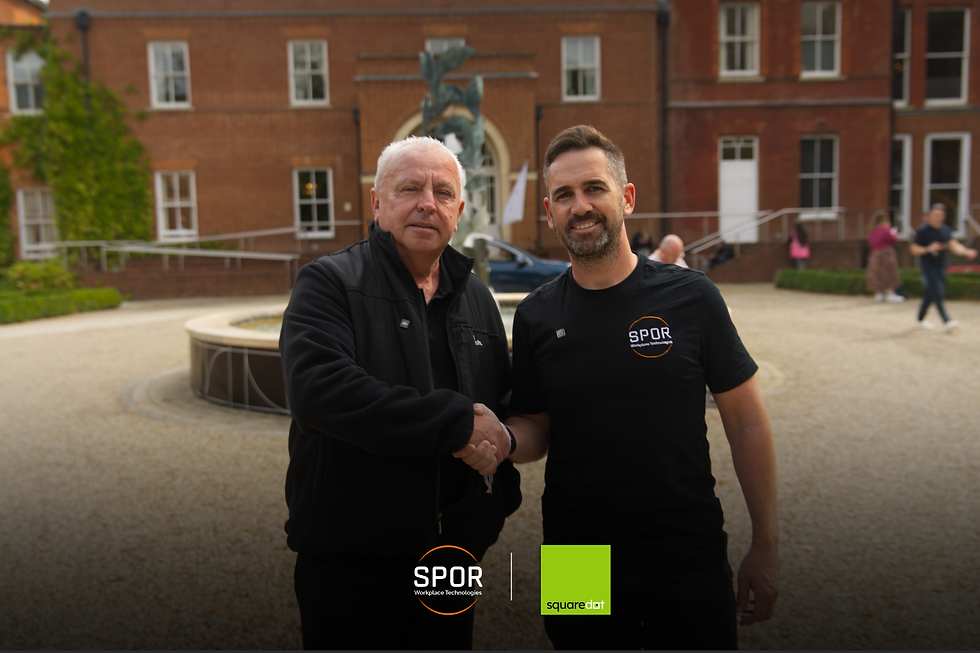
Why We Acquired Squaredot
Finding the right business to bring that thinking to life took just over two years and conversations with 112 companies. Most did not fit. Valuations were sometimes built around personal financial goals rather than the actual business, which made for some strange conversations along the way.
The one that did fit was Squaredot, an interior design consultancy that works at the very front end of an office move. Squaredot runs a feasibility and data collection phase before any design decisions get made, then builds the workplace design around what that data actually shows, rather than around guesswork.
Put simply, the two businesses now cover both halves of the same picture. SPOR Group holds the data on how the technology performs once it is installed and in daily use. Squaredot holds the data on how a physical space gets used before a single wall goes up. Very few businesses in this space join those two things together under one roof.
What This Means If You Are Planning an Office Project
For anyone planning an office move, a refurbishment or a fit out, this closes a gap that usually causes problems later. Space planning and interior design get worked out at the same time as the technology strategy, rather than a room being designed first and the AV squeezed in as an afterthought once the plans are already finished.
It also means the accountability does not stop once a project goes live. The recurring revenue model built around ongoing monitoring applies just as much to a newly designed space as it does to an existing meeting room estate.
If you are planning a workplace project and want technology and design working from the same data, worth a look at how we monitor performance day to day.


Comments