
Why You Don't Actually Know If Your Meeting Rooms Are Working

Why you probably do not know if your meeting rooms are actually working, and what proactive monitoring looks like compared to finding out the hard way.
Chris Gore | Updated 2026
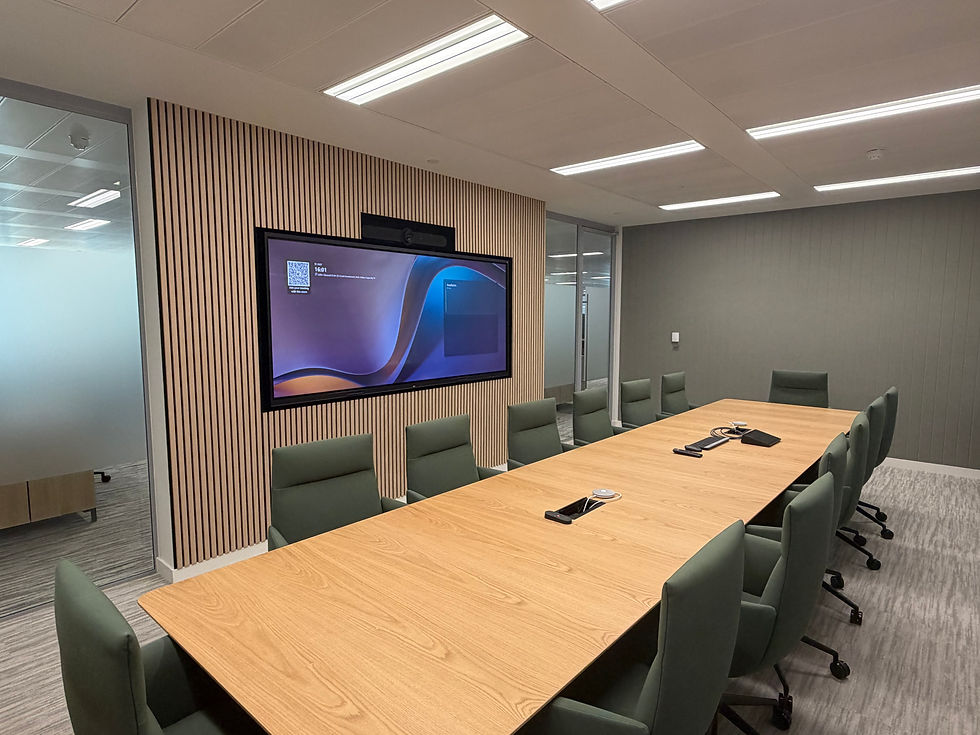
Ask most IT Directors or Facilities Managers whether their meeting rooms are working and the honest answer is: probably, as far as we know. That qualifier, as far as we know, is doing a lot of work. In most organisations, the only signal that a meeting room is not working is a complaint. Someone tried to use it, something failed and they raised a ticket.
That is reactive management. And it means the room was already broken before anyone knew about it. This guide covers what real visibility into meeting room performance looks like, and the gap between what most organisations assume they have and what they actually have
The Assumption Gap
Most organisations assume their meeting rooms are working because nobody has complained recently. That assumption is wrong more often than it is right. Here is why.
Faults that develop without anyone noticing
A camera loses its IP address at 2am on a Thursday. The device is technically offline but the room still looks fine from the outside. Nobody knows until Monday at 9:58 when the CEO presses start. At that point the fault has been present for four days and nobody had any idea.
Faults that people work around rather than report
The microphone at the far end of the table picks up poorly. People have learned to sit closer to it. Nobody has raised a ticket because the room is still usable. But remote participants on every call from that room are hearing a degraded audio experience. The fault is invisible to the people managing the estate because it has been normalised.
Faults that only appear under specific conditions
The display input switching fails when someone tries to share from a specific laptop model. It works fine with most devices. The IT team have never reproduced the fault because they tested with a different device. The fault appears intermittently for users and gets dismissed as user error.
Rooms that were never commissioned properly
Camera presets that were never set. Microphone sensitivity that was never tuned. Calendar integration that was tested once and assumed to be working. These rooms look fine in a basic walkthrough but underperform in daily use. Read why most AV installations fail six months after handover for the full picture on what happens when commissioning is skipped.
What Real Visibility Actually Looks Like In a Meeting Room

Device-level monitoring
Every device in every room watched in real time. Every IP address, every connection status, every performance metric tracked continuously. When a device goes offline, at any time, on any site, a monitoring platform registers it immediately. SPORTrack does this across every SPOR Group deployment globally. A camera in a Paris boardroom goes offline at 2am. The SPOR helpdesk gets an alert. The issue is investigated and resolved before anyone in Paris arrives on Monday morning.
Performance reporting
Monthly or quarterly reports showing device health across the full estate. Uptime figures by room and by device type. Fault history with resolution times. Warranty status for every device. This converts AV management from a reactive support function into a planned operational discipline with data behind it.
User experience data
Room booking data showing which rooms are being used and which are being abandoned. Feedback mechanisms that capture whether the technology worked as expected. Patterns that reveal rooms with recurring problems before those problems become visible as formal complaints.
Proactive intervention
Acting on monitoring data before users are affected. Scheduling firmware updates out of hours. Replacing devices approaching end of life before they fail. Catching the camera that is drifting offline intermittently before it fails completely in front of the wrong person at the wrong time.
The Test: What Would You Find If You Looked?
Here is the honest exercise. Pick five meeting rooms in your organisation right now. For each one, answer these questions:
What firmware version is each device running and when was it last updated?
What is the warranty status of each device and when does it expire?
Has the camera preset been checked since installation?
Has the microphone sensitivity been tested with someone sitting at the far end of the table?
When was the calendar integration last confirmed as working correctly?
What would you do if a device in that room failed at 2am tonight?
If any of those questions produce a response along the lines of good question or probably fine, the visibility gap is real. The rooms might be working. But you do not actually know.
SPOR Group provides real-time monitoring across every estate we manage through SPORTrack. Book a demo to see what genuine visibility into meeting room performance looks like across a live estate.
Want to See What Real Meeting Room Visibility Looks Like? SPORTrack monitors every device in every room in real time. Book a demo to see how proactive management works across a live estate. |


Comments