
Projector vs Display for Meeting Rooms: Which Should You Choose?

Projector vs display for meeting rooms: brightness, size, cost and maintenance compared, plus which one suits your room size and lighting best.
Chris Gore Updated 2026

Projector vs display is one of the oldest debates in meeting room design, and the honest answer has changed over the last few years. For most standard rooms, a commercial display is now the better choice, but projectors still win in some spaces. If you are specifying a small room, our guide to the best projector for a small meeting room covers that side in detail, and this article helps you decide which route to take in the first place.
Projector vs Display: The Main Differences
Brightness and Ambient Light
This is the difference most people notice first. A projector throws light onto a surface, so any light already in the room competes with the image. In a room with large windows, the picture can look faded unless you close the blinds or dim the lights. A commercial display produces its own light and holds up much better in a bright room. If your meeting room has glass walls or faces a sunny side of the building, that alone can settle the decision.
Picture Size
Projectors win on size. A projector can fill a very large screen without the price rising as fast as it does for a large panel, which is why they remain common in training rooms, auditoriums and large conference spaces. Commercial displays are limited by the largest panel you can buy, and they get expensive and heavy as they grow. For rooms where the back row sits a long way from the front, a larger image matters more than brightness.
Installation and Maintenance
A display is a single object on a wall. A projector needs a mounting point on the ceiling, the right distance from the screen, a screen or suitable wall, and often longer cable runs. Projectors also have a light source that fades over time, and some need filters cleaned or lamps replaced. Modern laser projectors last for many thousands of hours, but brightness still drops gradually. Displays are simpler to live with, although a failed panel usually needs replacing as a whole.
Shadows and Interaction
A projector can be blocked by someone standing in front of the beam, and a presenter walking across the screen can end up with the image on their face. Displays avoid that, and interactive touch displays double as a whiteboard. If a digital whiteboard is part of your plan, read our piece on whether your meeting room needs a digital whiteboard before you decide.
Which Should You Choose for Your Room?
For huddle rooms and small to medium meeting rooms, choose a display. It is easier to install, easier to use and works in normal lighting. For boardrooms, a large display or a multi screen arrangement usually looks better and costs less to maintain than a projector, as we explain in our guide to choosing the best display screen for a hybrid meeting room. Choose a projector when the room is large, can be darkened and needs an image bigger than any practical display. Training rooms and town halls are the classic examples.
What About LED Video Walls?
Direct view LED walls are a third option. They are bright, work in daylight and can be built to almost any size, which makes them attractive for large spaces and premium boardrooms. They also cost considerably more than a projector or a standard display, and they need specialist installation. For most meeting rooms they are more than the job requires, but they are worth considering where image size and brightness both matter.
What Does Each Option Cost?
The headline price of a projector can look low, but remember the screen, the mount, the cabling and the eventual replacement of the light source. A display costs more up front for the panel itself but often less to install and keep running. As always, the number that matters is the cost across the life of the room. Our boardroom AV installation cost guide shows how display costs fit into a full installation.
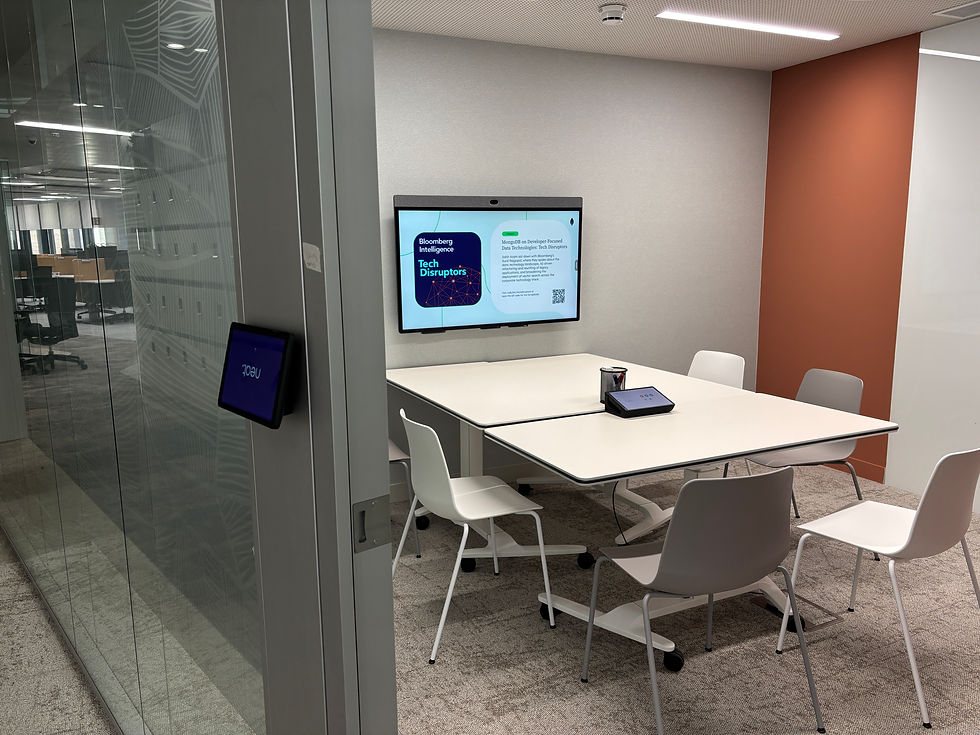
See a ready made AV bundle that includes a commercial display for smaller meeting spaces.
Frequently Asked Questions
What is the main difference in projector vs display for a meeting room?
A projector throws an image onto a surface and is affected by room lighting, while a display produces its own light and works well in a bright room. Projectors can produce much larger images, and displays are simpler to install and maintain.
Is a projector or a display better in a bright meeting room?
A commercial display. A projector image can look faded in a bright room unless the blinds are closed or the lights are dimmed.
When is a projector still the right choice?
When the room is large, can be darkened and needs an image bigger than any practical display, such as a training room, town hall or auditorium.
Do projectors need more maintenance than displays?
Usually, yes. A projector has a light source that fades over time and may need filters cleaned or parts replaced, while a display is a simpler single unit.
Is an LED video wall better than a projector or a display?
It is brighter and can be built to almost any size, but it costs considerably more and needs specialist installation. For most meeting rooms it is more than the job needs.
Related Posts


Comments